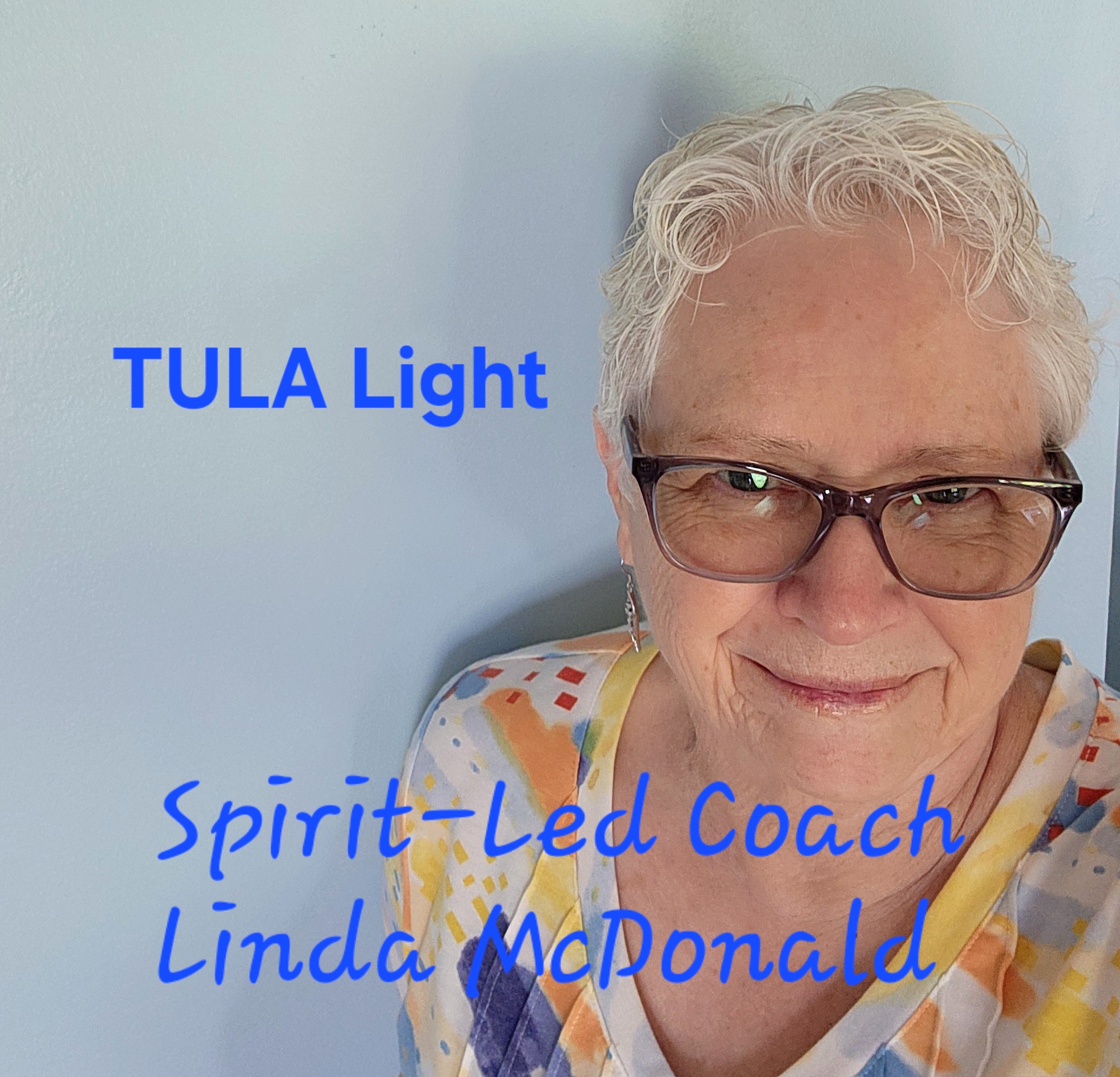
A Premonition 2026
The core message of the angels is "Love is the Only Way Forward" - Linda L McDonald
What Spirit Showed Me About 2026
A Year of Endurance, Adaptation & Quiet Turning
Welcome back to The Heartlight Letters.
Today I'm sharing something I've been sitting with for a while — a reading about 2026 that came through over several sessions with the guides.
Before we begin, I want to tell you what this is. And what it isn't.

This Is Not a Prediction
2026 is not a rescue year. It's a learning year.
That's what came through most clearly when I sat with the guides about what lies ahead.
But I want to be careful here — because what I'm offering is different from what you might find elsewhere.
This isn't prophecy. It's not fortune-telling. And it's not a timeline set in stone.
What I practice is spiritual inquiry — a yes/no dialogue with guides I've worked with for years. I ask for clarifications. I listen. I interpret patterns. And then I share what emerges, knowing that interpretation always flows through a human vessel with human limitations.
So why does this matter?
Because the way we receive guidance shapes what we do with it.
Predictions tell you what will happen. They position you as a passive receiver of fate. They can create fear, paralysis, or false certainty — all of which disconnect you from your own agency.
Orientation tells you where the currents are moving. It helps you understand the terrain. And then it returns the paddle to your hands.
That's what I'm offering here: a map, not a mandate.
Spirit does not remove free will. People still choose. Systems still shift. And the future remains shaped by human action — including yours.
What I invite you to do with this reading:
Take what resonates. Leave what doesn't.
Notice where you feel called to prepare, soften, or act.
Let your own discernment lead.
Remember that awareness itself is a form of participation.
You are not a spectator to 2026. You are a co-creator of it.
Now, let's look at what spirit showed me.
The Economy: Pressure & Adaptation
When I asked about the economy in 2026 — specifically how it affects people earning under four hundred thousand dollars a year — the answers were steady, consistent, and very human.
This was not a reading about collapse. But it was also not a reading about relief.
Spirit shows that in 2026, most people do not feel economically secure — yet they also do not feel they are in free-fall.
It's a year of endurance and adjustment rather than recovery.
Inflation does not ease enough to reduce overall stress. Housing and healthcare continue to strain households. Retirement feels uncertain. Financial anxiety remains a daily companion for many families.
And yet — this is important — jobs stabilize more than many expect. Layoffs slow. Wages rise modestly, just enough for some to keep pace, but not enough to feel ahead.
Food costs improve slightly. Not abundantly — but noticeably. Enough to matter at the grocery store, even if nowhere else.
Spirit emphasizes that economic policy in 2026 continues to favor higher earners, leaving many households feeling like they're working harder just to hold their ground.
What stands out most is not financial relief — but resilience.
People adapt. They redefine what "enough" means. They lean into side income, community support, and practical choices rather than waiting for policy to save them.
Spirit repeatedly showed that 2026 is not the year people feel wealthy — but it is a year many realize they are capable.
So if you're wondering whether 2026 brings economic relief, the answer is: not yet.
But if you're wondering whether people make it through — with creativity, strength, and growing clarity — the answer is yes.
This is not a rescue year. It's a learning year.
When money feels tight, people feel it everywhere. Economic pressure doesn't just strain wallets — it strains hearts. And when enough people are under strain, something begins to shift.
So I asked spirit what happens next — not in government, but in us.
The Right/Left Divide: Relational Softening
When I asked about the political divide in this country in 2026, I expected complicated answers.
What I received was surprisingly simple.
Spirit shows that in 2026, the divide between right and left begins to loosen its grip on everyday life.
Not because people suddenly agree — but because many are tired of living in constant tension.
Families find it easier to talk again. Conversations don't feel as loaded. The emotional charge around politics softens.
Fear-based messaging loses its power. Media outrage doesn't land the way it used to. People feel less pressure to choose sides and more permission to step back.
Empathy increases — not through persuasion, but through proximity. Through knowing someone you love who doesn't see the world exactly the way you do.
What Changes — and What Doesn't
Spirit is clear: this is not a year of political unity. Differences remain. Opinions remain strong.
What changes is the tone.
Public dialogue becomes less dehumanizing. Personal relationships begin to recover.
Younger generations model healthier engagement. Anger fatigue opens the door to listening — not because anyone "wins," but because peace starts to matter more than being right.
The divide doesn't disappear in 2026. But it stops defining us.
And when the noise quiets — even slightly — something else becomes visible.
Government: Stabilization Without Inspiration
After looking at the economy and the social divide, the next question was about government. Not personalities. Not campaigns. But how governance itself feels to people in 2026.
Spirit shows that in 2026, government becomes more predictable — though not necessarily more inspiring.
There are meaningful leadership shifts. Cooperation increases. Legislative gridlock eases. Things move — not quickly, but steadily.
Executive authority expands rather than contracts. This is not presented as dramatic or chaotic, but as consolidating — designed to reduce instability rather than inflame it.
Domestic policy places greater emphasis on economic stability over ideology. Education access improves. Social safety nets strengthen. Immigration policy becomes more balanced and humane.
What Doesn't Happen Matters
Spirit is clear that 2026 is not a breakthrough year for healthcare reform. Defense spending does not rise. Governance does not become exciting.
What it becomes is... functional.
Trust & Transparency
Government transparency improves — not because institutions become suddenly virtuous, but because opacity becomes harder to maintain.
Public trust rises modestly. Not from enthusiasm — but from relief. From fewer shocks. From fewer reversals. From fewer moments of "What just happened?"
Governance feels more predictable. And for many people, that predictability feels like progress.
Spirit does not show a perfect government in 2026. It shows a steadier one. Less reactive. More controlled. More focused on keeping the system intact.
When things stabilize internally, the way a country engages the world begins to change.
Foreign Relations: Restraint & De-escalation
After looking at what's happening within the country — economically, socially, and politically — the next question was about how the United States relates to the rest of the world in 2026.
What stood out here was not ambition... but restraint.
Spirit shows that in 2026, U.S. foreign relations move away from escalation and toward de-escalation.
This doesn't look like trust. It looks like caution.
Foreign policy becomes less reactive. Diplomatic communication improves. The emphasis shifts toward avoiding disruption rather than asserting dominance.
This is not a year of bold global leadership. It is a year of pulling back from the edge.
A Few Specifics
With China, tensions ease. Economic decoupling slows. Military escalation is avoided. Cooperation does not fully return — particularly around global initiatives like climate and public health — but direct conflict is repeatedly shown as being sidestepped.
With South America, relationships stabilize. Trade strengthens. Engagement becomes more collaborative than coercive. Spirit presents this region as one of quiet improvement rather than headlines.
Africa stands out — not for conflict, but for neglect. Spirit does not show increased cooperation, expanded partnerships, or mutual investment in 2026. Not because the continent lacks importance — but because it remains underprioritized. This absence is part of the message.
Overall, spirit emphasizes de-escalation over dominance. Avoidance of major conflict matters more than advancing influence. The global posture of the U.S. in 2026 is less aggressive, less reactive, and more internally focused.
Spirit does not show a world at peace in 2026. But it does show a world stepping back from the brink.
Sometimes stability doesn't arrive as progress. It arrives as restraint.
But not all pressure comes from outside a country. Some of it lives in the shadows of power.
The Shadows: Pressure, Power, and Containment
These questions weren't about what unfolds easily. They were about what threatens to unfold — and then doesn't.
This part of the reading looked at fear, power, and the places where rhetoric becomes louder than reality.
Before I go any further, I want to be clear: this is not about predicting harm. It's about understanding where pressure exists — and where it fails to become permanent power.
I know this section may feel heavy. Stay with me — there's light woven through it.
Theme One: Threat vs. Outcome
Spirit repeatedly showed a gap between threat and outcome.
Language escalates. Posturing increases. Pressure is applied — sometimes aggressively.
But again and again, the feared outcomes do not complete.
Military force is discussed but not successfully executed. Expansion is suggested but not achieved. Invasions are implied but do not resolve.
Spirit consistently declined to show successful follow-through on the most alarming scenarios.
What's emphasized here is not peace — but containment.
Theme Two: Intent vs. Success
Spirit distinguishes very clearly between intent and success.
In several lines of questioning, intent appears real. Words are not accidental. Pressure is not imaginary.
But intent does not equal outcome.
Efforts to coerce, intimidate, or force compliance repeatedly fail to achieve their ultimate goals.
Spirit shows obstacles — not dramatic ones — but practical ones. Resistance. Oversight. External limits.
In other words: power meets friction.
Theme Three: Shifting Relevance of Power
One of the clearest messages in this section was that certain trajectories lose relevance quickly.
Not because they're resolved. Not because they succeed.
But because the figure or force driving them no longer holds the same position of influence.
As that shift occurs, many of the most alarming storylines simply... fall away.
Spirit did not emphasize how this happens. Only that when relevance ends, so does momentum.
Theme Four: Internal Force and Accountability
Spirit also highlighted heightened internal pressure — particularly around enforcement and the use of force.
This is shown as real. It is not minimized.
But it is not shown as unchecked.
Public attention increases. Resistance grows. Oversight follows.
Spirit repeatedly shows that actions taken in the shadows are brought into the light — not immediately, but inevitably.
Accountability does not erase harm — but it interrupts escalation.
Theme Five: Fear vs. Reality
One of the most important distinctions in this section is between fear and outcome.
Fear rises quickly. Narratives amplify. Imaginations run ahead of reality.
But Spirit does not show fear becoming destiny.
The most extreme outcomes people worry about are repeatedly shown as not completing.
Pressure exists. Tension exists. Catastrophe does not.
What Spirit Emphasizes Most
When I step back and look at this entire section as a whole, what stands out most is this:
Spirit does not show a future without pressure.
It shows a future where pressure fails to become permanent power.
That distinction matters.
It doesn't mean "nothing happens." It means the worst-case scenarios don't define the path forward.
Containment, Not Comfort
The Shadows are not here to frighten. They're here to show where limits exist.
Limits to power. Limits to force. Limits to how far fear actually travels.
And just like the rest of this reading, this isn't about certainty. It's about orientation.
Knowing where the pressure is — and where it stops.
With that understanding, we come back to something very tangible — daily survival.
Food Supply Stress: Strain Without Collapse
When I asked about food shortages in 2026, I wasn't shown panic or collapse.
What I was shown was strain — and how unevenly that strain is felt.
Spirit shows that food supply stress does affect households in 2026 — but not through widespread absence.
This is not a year of empty shelves everywhere.
Instead, shortages show up as pressure: higher prices, fewer options, and increased stress for lower-income households.
Spirit is clear that these challenges are driven more by distribution and labor shortages than by a lack of food itself. Fewer workers. Fewer drivers. Fragile supply chains.
Climate, Conflict, and Cost
Climate-related factors do affect food availability, and global conflict adds further strain to imports and exports.
As a result, food prices rise — not just from inflation, but from supply stress layered on top of it.
Government intervention does not significantly soften these impacts. Food assistance programs do not expand in a meaningful way.
Where Resilience Appears
What spirit emphasizes most is local resilience.
Community-based food systems grow in importance. Local networks matter more. Adaptation happens closer to home.
Food insecurity does increase — despite overall availability — but by the end of 2026, supply stress begins to ease.
Spirit does not show hunger becoming universal. It shows preparedness and local support becoming more important.
Food stress is often where larger environmental pressures show up first.
Environmental & Disaster Challenges: Regional Stress, Community Response
When I asked about environmental and disaster-related challenges, the answers were more specific than dramatic.
Spirit does not show a general increase in extreme weather frequency in 2026.
Nor does it show mass displacement or widespread infrastructure collapse.
Instead, stress concentrates regionally.
Disaster response systems become overwhelmed in specific areas — particularly drought-affected regions in Central America and hurricane-prone areas in the southeastern United States.
Impact & Recovery
Recovery efforts lag behind damage. Insurance costs rise. Vulnerable populations are affected first and hardest.
Water availability becomes a regional concern. Agricultural areas face increasing climate stress.
Adaptation & Awareness
Environmental policy does not significantly improve preparedness in 2026.
However — this matters — communities adapt faster than institutions.
Public awareness increases. Cooperation improves in response to shared threats. Long-term resilience planning begins to expand beyond emergency response alone.
Spirit shows that environmental stress contributes to economic instability. But it also shows cooperation increasing where survival requires it.
And when systems strain, the pressure doesn't fall evenly.
Rights of the Marginalized & Disenfranchised: Beginning May 2026
The final area I asked about was the rights and lived experience of marginalized and disenfranchised people.
Every question in this section pointed the same direction.
Beginning around May of 2026, pressure on marginalized communities increases across legal, social, and institutional spaces.
Legal protections are challenged. Some rights are restricted at state or local levels. Courts play a central role in determining outcomes.
Fear-based narratives are used to justify limitations. Opposition intensifies.
Resistance, Visibility, and Solidarity
And yet — this is where the message widens.
Public resistance grows. Grassroots advocacy strengthens. Marginalized voices gain visibility despite opposition.
Younger generations influence the discourse. International pressure factors into domestic decisions.
The Throughline
Spirit shows a dual movement: pressure and progress happening at the same time.
Some rights advance even as others are challenged. Community solidarity increases. Long-term progress continues — despite short-term setbacks.
Spirit does not show erasure.
It shows struggle paired with persistence.
It carries emotional weight and meaning.
Your Invitation for 2026
So where does this leave you?
Not as a passive observer. Not as someone waiting to see what happens.
But as someone who now has orientation — and can choose how to move.
Here's what I invite you to consider for the year ahead:
Build local. Spirit showed again and again that resilience emerges from proximity — from neighbors, communities, local food systems, and face-to-face connection. The institutions won't save us. But we can save each other.
Release the need to know. This reading isn't meant to give you certainty. It's meant to give you grounding. Hold it loosely. Let your own intuition confirm or question what resonates.
Soften where you can. The political divide begins to ease in 2026 — but only because individuals choose peace over being right. That choice starts with you. In your family. In your friendships. In your own heart.
Stay present to your own power. Fear wants you to feel small. But spirit showed clearly that pressure does not become permanent power. You are part of the friction that keeps the worst outcomes from completing. Your attention matters. Your voice matters. Your choices matter.
Trust your capacity. If there's one message that echoed through every section of this reading, it's this: people make it through. Not because the year is easy. But because they discover they are capable.
You are capable.
2026 is a learning year. And you are already learning.
Closing Reflection
Before I close, I want to say this clearly and gently.
This is not a prediction. It's not a promise. And it's not a directive.
What I've shared here is an interpretation of spiritual responses — one way of listening, one moment in time.
Spirit does not remove free will. People still choose. Systems still shift. And the future remains shaped by human action.
If anything, what came through most strongly wasn't certainty.
It was capacity.
The capacity to adapt. The capacity to soften. The capacity to step back from harm.
Take what resonates. Leave what doesn't. And let your own discernment lead.
That, too, is part of the message.
And if you're still here, reading — that itself is an act of presence.
Thank you for holding this space with me.
With love,
TULA Light
~ Where Story Meets Spirit ~
If this letter spoke to you, I'd be honored if you shared it with someone who might need it. And if you're not yet subscribed, you can join The Heartlight Letters below — where spirit and story meet every week.
You can view this article on video at https://youtu.be/Dc77_3vxFfU
TULA Light